A cybersecurity strategy is a plan that connects your business’s risks, controls, people, and responses into one direction. It’s not a single tool, and it’s also not a checklist you tick off once.
Maybe you’ve already got MFA switched on and backups running. Maybe your team has even sat through some security training. That’s a start, not a strategy.
If you’re here trying to work out whether those pieces add up to something bigger, you’re in the right place. This article breaks down what a cybersecurity strategy is.
You’ll see what makes up a strategy and the main threats it needs to answer for. Then we get into the frameworks Australian SMBs use and how to start building your own.
What is a Cybersecurity Strategy?
A cybersecurity strategy is a structured plan for reducing cyber risk across your organisation.
A cybersecurity strategy explains:
- What the business need to protect?
- Which threats are most relevant?
- Which controls will be used?
- Who owns security decisions?
- Who improvement will be measured?
- How team respond when pressure hits?
A cyber security strategy is broader than a cybersecurity policy because it connects goals, risks, controls, people, and response into one operating direction.
It is also different from a technical checklist. A checklist might confirm that MFA is enabled or backups exist.
A strategy asks whether those controls match the organisation’s risk, whether they are maintained, and whether someone can prove they still work.
What are the Key Components of a Cybersecurity Strategy?
The key components of a cybersecurity strategy are risk assessment, security policies, technical controls, staff training, threat monitoring, incident response, and leadership ownership.
These components work together. Each component answers a different question as discussed earlier.
Risk Assessment
Risk assessment gives your cybersecurity strategy its priority order.
Risk assessment identifies what could harm the business and which risks deserve priority, which includes:
- Asset review
- Access review
- Business impact analysis
- Practical vulnerability assessment.
Without this step, you can end up protecting everything equally, which usually means protecting the wrong things first.
The output of the risk assessment should show what needs action, who owns the fix, and how the business will confirm the risk has reduced.
Security Policies and Procedures
Security policies and procedures turn your cybersecurity strategy into rules your team can actually follow.
Security policies and procedures define how people should handle:
- Password management
- MFA
- Access requests
- Devices
- Data
- Suppliers
- Incident reports
- Acceptable use.
Without them, your strategy stays too abstract, and every risky moment depends on personal judgement.
For an SMB, the goal of security policies and procedures is to make the right action more visible before your team has to make decisions under pressure.
Technology and Security Controls
Technology and security controls are where your cybersecurity strategy becomes practical protection, which may include:
- MFA
- Endpoint protection
- Patching
- Access control
- Email security
- Logging
- Encryption
- Backup protection.
They help you reduce exposure across users, devices, cloud systems, email, applications, backups, and sensitive data. Data loss prevention narrows that list down to the sensitive data itself, flagging or blocking it before it leaves approved systems.
The point of technology and security controls is to choose controls that match your actual risks, then make sure someone owns, reviews, and maintains them.
Security Awareness and Training
Security awareness and training help your people act before small risks become real incidents.
For example, your strategy may include strong controls, but your team still faces phishing emails, urgent payment requests, suspicious links, shared files, and unexpected login prompts.
Training gives them the judgement to pause, check, and report the moment something feels wrong.
The goal of security awareness and training is to make safe action easier to understand, repeatable, and easy to follow under pressure.
Monitoring and Threat Detection
Monitoring and threat detection help the business see suspicious activity early, which can include:
- Alert review
- Endpoint detection
- Identity monitoring
- Log collection
- Cloud activity review
- Unusual sign-in checks.
Because in many cases of Australian SMBs, the problem is often not a total lack of tools. But ambiguous ownership when those tools surface unusual or suspicious activity.
Incident Response and Recovery
Incident response and recovery define what happens when a cyber incident occurs.
These components make your cybersecurity strategy useful when prevention is no longer enough.
An incident response plan should explain:
- How the business identify an incident?
- Who makes decisions?
- Who communicates?
- How are systems isolated?
- When external support is called?
- How is recovery validated?
That’s why recovery should include tested backups, more defined restore priorities, and post-incident review.
Without that plan, every minute of an incident becomes harder to manage.
Governance and Leadership
Governance and leadership keep your cybersecurity strategy from becoming everyone’s side task. The main idea is to make cybersecurity accountable.
To get those accountability cybersecurity strategy, your leaders need to decide:
- Which risks matter most
- Who owns each control
- How progress is reviewed
- When security issues need escalation.
Without that ownership, important work can stall between teams, tools, and good intentions.
This is what helps a strategy stay useful after the first planning session. Without ownership, security work often fades when urgent business work returns.
What Threats Should a Cybersecurity Strategy Address?
In 2026, a cybersecurity strategy for Australia SMBs should address phishing, ransomware, data breaches, and insider threats.
These threats are the risks most likely to test your people, systems, data, access controls, and response plan. The sections below show how each threat connects to your strategy, not just your security tools.
Phishing
Phishing is dangerous because it can trick your staff into sharing passwords, exposing sensitive information, or authorising fraudulent payments.
💡 According to the Verizon 2026 Breach Impact Study report, business email compromise, often started through phishing, makes up 19% of cyber insurance claims for small businesses.
The 2026 Data Breach Investigations Report also found mobile-centric phishing success rates are 40% higher than traditional email vectors.
Ransomware
Ransomware can stop your business from operating by locking your files, disrupting critical systems, and can force your team into recovery mode before you know how far the damage has spread.
In Australia’s business landscape, ransomware can cause severe downtime and reputation damage.
The 2026 DBIR by Verizon shows that 96% of ransomware victims, where size is known, are SMBs.
The Verizon 2026 Breach Impact Study also found ransomware accounts for 39% of SMB cyber claims, with extreme losses reaching up to 7% of annual revenue.
Data Breaches
Data breaches expose the information your customers trust you to protect.
When sensitive data is accessed or disclosed, your business may face regulatory scrutiny under Australia’s Notifiable Data Breaches scheme and serious financial pressure.
Verizon’s 2026 Breach Impact Study found that the median cost of a data breach has nearly doubled in five years, now sitting at about A$158,521.
For a small Australian business, that cost can put real strain on cash flow, operations, and customer confidence.
Insider Threats
Insider threats are dangerous because they are people who already have a path into your business.
They can come from malicious employees, careless mistakes, or staff using unauthorised Shadow AI tools.
ACSC notes that malicious insiders can use legitimate access to destroy systems, steal intellectual property, and sabotage operations.
The Verizon 2026 DBIR highlights that the human element is involved in 62% of all breaches, while internal actors are responsible for 12% of overall breaches.
Which Frameworks Guide a Cybersecurity Strategy?
For Australian SMBs, the most relevant cybersecurity strategy references often include Essential Eight, SMB1001, NIST CSF, ISO/IEC 27001, and Zero Trust principles.
Before looking at each one, use the table below to compare what each framework helps you decide and where it best fits in your cybersecurity strategy.
| Framework | What it helps you decide | Best fit in your cybersecurity strategy |
|---|---|---|
| Essential Eight | Which baseline technical controls need priority | Practical control uplift for Australian SMBs |
| SMB1001 | How mature your SMB security program needs to become | Staged maturity, evidence, and certification readiness |
| NIST Cybersecurity Framework | How to organise cyber risk across the business | Governance, risk management, response, and recovery structure |
| ISO 27001 | How to manage information security formally | Policy, risk, evidence, and management system discipline |
| Zero Trust | How access should be verified and limited | Identity, least privilege, device trust, and cloud access control |
Essential Eight
Essential Eight is the best fit when your cybersecurity strategy needs a practical Australian baseline.
Developed by the Australian Signals Directorate, Essential Eight is designed to protect businesses of all sizes, from SMBs to large enterprises, against common and damaging threats to internet‑connected IT networks.
Essential Eight can help SMB because the 2026 DBIR highlights that System Intrusion, largely driven by ransomware, accounts for 100% of SMB breaches.
It also shows vulnerability exploitation has surged by 55% to become the top initial access vector.
Essential Eight helps you respond to those risks directly through controls such as multi-factor authentication, regular backups, and rapid patching.
SMB1001
As a cybersecurity framework, SMB1001 helps you mature without drowning in enterprise-level requirements.
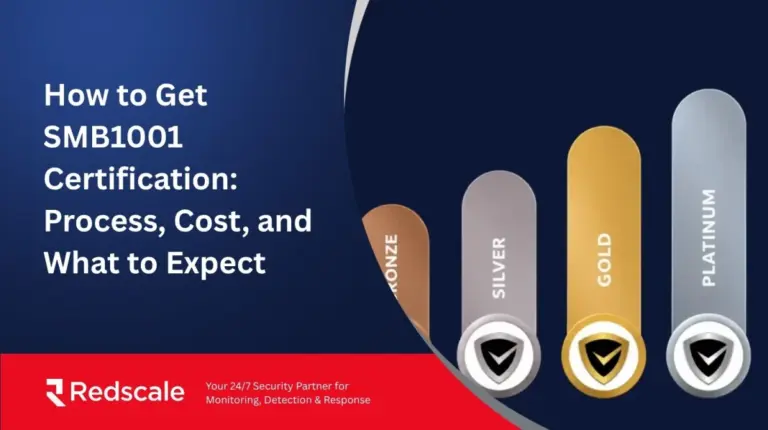
If enterprise frameworks feel too heavy for your time, budget, or internal team, SMB1001 gives you a multi-tiered cybersecurity standard built to be affordable and scalable for small and medium-sized businesses.
SMB1001 really counts when we see the Verizon 2026 Breach Impact Study that found cyber losses can be disproportionately damaging for SMBs, potentially reaching up to 7% of total annual revenue.
It gives your business a certification pathway defined by clear SMB1001 requirements, a step-by-step way to mitigate critical risks, and a structure that can grow as your security needs become more complex.
It gives your business a certification pathway, a step-by-step way to mitigate critical risks, and a structure that can grow as your security needs become more complex.
NIST Cybersecurity Framework
NIST Cybersecurity Framework is the best fit when you need to treat cybersecurity as a business risk.
CSF 2.0 is adaptable for different organisation sizes, especially for small businesses with limited resources.
Its newer Govern function helps your leadership make clearer decisions about risk, ownership, priorities, and accountability.
NIST CSF gives your strategy a full operating map: Identify, Protect, Detect, Respond, and Recover.
Its small business quick-start guides can help you turn that lifecycle into practical steps your team can actually follow.
ISO 27001
When your cybersecurity strategy needs stronger trust, governance, and client assurance, the ISO 27001 is the best answer.
For Australian SMBs, ISO 27001 becomes relevant when larger clients, partners, or supply chain reviews expect clearer proof that your business manages information security properly.
The trade-off is weight. ISO 27001 can require more documentation, ownership, audit readiness, and ongoing evidence than smaller teams can manage easily.
If your business is still building its baseline, Essential Eight or SMB1001 may be a more practical first step.
Zero Trust
Zero Trust is a security model based on continuous verification and least privilege.
Zero Trust is not a single product. Zero Trust is a way of designing access so users, devices, applications, and data are verified more carefully.
For Australia SMBs, Zero Trust often starts with practical controls, which may include:
- MFA
- Conditional access
- Device checks
- Least privilege
- Strong identity governance
- Better visibility into cloud applications.
Why Does a Business Need a Cybersecurity Strategy?
Your business needs a cybersecurity strategy because cyber risk can move quickly from a technical issue into a serious business problem.
For example, a single breach can affect your operations, customer trust, cash flow, and regulatory exposure.
Under Australia’s Notifiable Data Breaches scheme, you may need to notify affected people if personal information is compromised. That makes data protection more than an internal IT concern.
The financial impact can also be difficult for smaller teams to absorb. According to the Verizon 2026 Breach Impact Study, the median economic impact of a data breach has reached A$158,521.
The same study found ransomware losses can reach up to 7% of a small business’s annual revenue.
Your strategy gives you a way to act before pressure hits because it helps you:
- Protect customer PII (Personally Identifiable Information), which is the most frequently stolen data type globally at 53%.
- Reduce exploitable weaknesses.
- Prepare response steps.
- Keep ownership clear when something goes wrong.
How Should an Australian SMB Build a Cybersecurity Strategy?
An Australian SMB should build a cybersecurity strategy by starting with business risk, then turning that risk into practical controls, ownership, and review cycles.
The strategy does not need to be huge. It needs to be understandable enough to run. For a 10-person startup, that might be a simple roadmap. For a 100-person SaaS business, it may need more formal governance, monitoring, supplier review, and incident response.
Step 1: Define Business Goals and Risk Appetite
You need to start by deciding what your business must protect and how much risk it can accept.
Ideally, your business must protect:
- Customer data
- Financial systems
- Intellectual property
- Cloud platforms
- Operational systems
- Regulated information
- Revenue-critical applications.
Leaders should also decide which risks are acceptable, which risks need treatment, and which systems require stronger protection.
Where relevant, this step can also support external security expectations.
Because some businesses may need specific answers for supplier reviews, customer questionnaires, cyber insurance discussions, or leadership reporting.
Step 2: Assess Your Current Security Posture
Assess the current environment before choosing new tools. This means reviewing:
- Users
- Devices
- Cloud platforms
- Software
- Suppliers
- Data flows
- Backups
- Permissions
- Vulnerabilities
- Policies
- Incident processes.
The assessment should identify both technical gaps and ownership gaps.
Often, the most useful finding is an ownership gap: a control exists, but nobody checks whether it still works.
Step 3: Identify Gaps and Prioritise Risks
Identify the gaps that create the most risk for your business first.
You may find missing MFA, untested backups, exposed systems, weak email security, unclear incident escalation, or vulnerabilities with no remediation owner.
The danger is not only that these gaps exist. The danger is that your team may treat them all the same.
Your strategy should help you decide what needs action now, what can wait, and who owns the fix.
That’s why Essential Eight and SMB1001 can help turn those gaps into a accountable maturity path.
Step 4: Implement Controls
Implement the controls that reduce your highest-priority risks first. We suggest to start with high-impact foundations such as:
- MFA
- Patching
- Endpoint protection
- Backups
- Identity management
- Email security
- Access reviews
- Logging
- Staff reporting.
Then move into more mature controls as risk and business need justify them.
Also, each control should have an owner, a review rhythm, and evidence that it works.
Otherwise, your strategy becomes a list of good intentions instead of protection your business can rely on.
Step 5: Monitor, Test, and Improve
Monitor, test, and improve your strategy so it keeps working after the first rollout.
Because, your business will change. That is why your strategy needs regular checks across alerts, access, vulnerabilities, backups, incidents, and staff reporting.
Without review, yesterday’s protection can become today’s blind spot.
Your strategy should create a simple rhythm to keep your security useful after the first rollout:
- Check what changed
- Test what matters
- Fix what is weak
- Record what improved.
Testing what matters usually means more than a passive review.
Offensive security work puts real attack techniques against your controls to see what actually holds up. Penetration testing is the most common way SMBs get that proof, showing exactly where a determined attacker could get through and where they can’t.
What are the Best Practices for a Cybersecurity Strategy?
The best cybersecurity strategy is proactive, practical, and easy for your business to maintain.
Start with the controls that reduce the most common risks first:
- Strengthen identity and access management so weak passwords, exposed accounts, and poor access control do not become easy entry points.
- Use phishing-resistant multi-factor authentication to make stolen credentials harder to abuse.
- Patch software quickly so known vulnerabilities do not stay open longer than necessary.
- Protect backups and test recovery so your business has a path back after disruption.
- Keep incident response steps less ambiguous so your team knows who acts, who escalates, and what happens first.
For SMBs, the hard part is keeping them alive when your team is busy. That’s why, your strategy should create a simple rhythm:
- Review exposure
- Assign fixes
- Check evidence
- Test recovery
- Report what changed.
That’s why, managed security services can help maintain monitoring, remediation tracking, reporting, and response activity.
For reference, the 2025 IBM Cost of a Data Breach Report shows that 29% of organisations plan to invest in managed security services to strengthen their defence capabilities.
Build Your Cybersecurity Strategy with RedScale
For Australian SMBs, the harder work of cybersecurity strategy starts after: checking alerts, closing gaps, testing recovery, tracking evidence, and making sure security actions do not disappear behind daily priorities.
Once your business depends on cloud platforms, customer data, supplier trust, and always-on access, that operating rhythm matters.
That’s why RedScale helps turn your cyber security strategy into a managed security routine your team can actually maintain.
RedScale provides managed security services to support your business with managed monitoring, vulnerability management, remediation tracking, reporting, and response support.
Contact RedScale to turn your cybersecurity strategy into a managed security function your business can rely on.