businessesCybersecurity is the practice of protecting digital systems, data, accounts, devices, applications, and networks from unauthorised access, disruption, theft, or misuse.
Maybe you’re wondering what that means, since it appears in cyber insurance forms and ASD (Australian Signals Directorate) guidance. Some people use it to mean antivirus software. Others use it for compliance, staff training, or incident response.
That range is why the definition (sometimes) shifts depending on who you ask.
This article walks through what cybersecurity means, the five types, the threats Australian small businesses face, and where to start.
What is Cybersecurity?
Cybersecurity is the discipline of reducing digital risk across systems, data, users, software, and connected services. Usually, cybersecurity includes:
- The controls
- Practices
- Tools
- Decisions
- Response routines used to prevent, detect, contain, and recover from cyber threats.
A cyber threat may target a person, a device, a cloud account, a business application, a supplier connection, or a database.
Cybersecurity means the organisation has sensible layers of protection, so one mistake or one failed control does not automatically become a major incident. So, it does not mean that every threat can be stopped.
A useful way to think about cybersecurity is through the lifecycle of risk. This means, cybersecurity help you identify:
- What needs protection
- Protect it with controls
- Detect suspicious activity
- Respond when something goes wrong
- Recover with minimal damage.
Why Cybersecurity Matters: The Scale of the Threat
Cybersecurity matters because most businesses now rely on digital systems to operate, communicate, store data, and get paid.
💡 The Australian Signals Directorate’s (ASD) Annual Cyber Threat Report 2024–2025 recorded more than 84,700 cybercrime reports, one every six minutes. It also found the average self-reported cost per cybercrime report for small businesses rose 14 per cent to $56,600.
For Australian small businesses, the point is practical risk control:
- Access creates risk when email, cloud apps, finance systems, or admin accounts are not reviewed.
- Small teams create exposure when SaaS adoption, remote work, and contractor access move faster than security ownership.
- Cybersecurity reduces impact by protecting the most likely paths of compromise before they become business problems.
The goal is to keep the business harder to compromise, easier to monitor, and better prepared to recover.
The Main Types of Cybersecurity
Cybersecurity has several major types, each focused on a different part of the digital environment;
- Network security
- Endpoint security
- Cloud security
- Application security
- Data and Identity security
These categories overlap in practice. Therefore, we need to evaluate who owns the control, who reviews it, and what happens when something is not working.
Network Security
Network security protects the connections between systems, users, services, and the internet. The network security includes:
- Firewalls
- Secure remote access
- Network segmentation
- Monitoring
- Intrusion detection
- DNS filtering
- Controls that limit unnecessary exposure.
The purpose is to make it harder for an attacker to move through the environment after gaining a foothold.
For small businesses, network security is more about reducing open doors. This may include closing unused remote access, securing Wi-Fi, reviewing firewall rules, and monitoring unusual traffic.
In practice, this means knowing which services are exposed to the internet and whether remote access is still needed.
Endpoint Security
Endpoint security protects laptops, desktops, mobile devices, and servers. These devices are common entry points because people use them every day.
These devices receive email, download files, access SaaS platforms, store browser sessions, and connect to company systems from different locations.
That’s why endpoint security may include device encryption, anti-malware, endpoint detection and response, patching, device management, and controls that stop unauthorised software.
For a lean team, the key question is simple: can you see which devices exist, whether they are healthy, and what happens if one is lost or compromised?
Cloud Security
Cloud security protects data, identities, applications, and configurations inside cloud platforms. Cloud security usually includes:
- MFA
- Access reviews
- Secure configuration
- Logging, backup
- Encryption
- Least privilege
- Careful management of third-party integrations.
For Australian startups and SaaS businesses, cloud security is often central to cybersecurity. The business may not own much physical infrastructure, but it still owns responsibility for access, configuration, data handling, and monitoring.
The issue in cloud security is often ownership: someone needs to know which users, apps, integrations, and admin accounts still have access.
That’s why ASD’s ACSC notes that small business cloud security should adopt Essential Eight principles for cloud environments. The guidance balances common threat protection with accessibility for resource-constrained organisations.
Application Security
Application security protects software from weaknesses that attackers can exploit, which includes:
- Secure coding
- Vulnerability testing
- Dependency management
- Authentication controls
- Input validation
- Access control
- Secure deployment practices.
Application security matters for SaaS companies, e-commerce businesses, digital agencies, and any organisation that builds or heavily customises software. Therefore, it should not be seen as a developer issue only.
Business leaders still need to know whether the application handles sensitive data, how updates are tested, who can access production systems, and how vulnerabilities are prioritised.
Vulnerability testing itself covers two related but different activities: a vulnerability assessment scans and prioritises known weaknesses, while a penetration test manually attempts to exploit them to show what an attacker could actually reach.
Data and Identity Security
Data and identity security protects the information a business holds and the accounts that can access it.
Identity is often the control plane for modern businesses. If an attacker gets into email, cloud storage, a CRM, or an admin account, they may not need to “hack” the network at all.
While data security includes classification, encryption, retention, backup, access control, monitoring, and secure deletion. These controls are often grouped together as data loss prevention practice.
In Australia, OAIC guidance under APP 11 states that entities must take reasonable steps to protect personal information from misuse, interference, loss, unauthorised access, modification, or disclosure. (OAIC)
Common Cyber Threats Cybersecurity Defends Against
Cybersecurity defends against several common cyber threats In Australia, which include malware, ransomware, phishing, social engineering, and data breaches.
Most small business incidents often begin with a reused password, a fake invoice, an unpatched system, a malicious attachment, or a cloud account that was never reviewed.
Malware and Ransomware
Malware and ransomware are cyber threats that use malicious software to disrupt systems, steal information, or pressure a business into paying for recovery.
Malware can damage files, spy on users, steal data, or give an attacker control of a device.
Ransomware is a specific type of malware that encrypts systems or data and demands payment before access is restored.
Cybersecurity reduces this risk through endpoint protection, patching, email filtering, restricted admin access, backups, monitoring, and response planning. Backups matter because recovery should not depend on whether an attacker keeps their word.
Phishing and Social Engineering
Phishing and social engineering attacks trick people into giving away access, money, or information.
A phishing email may imitate a supplier, bank, executive, software platform, or internal login page.
Social engineering may also happen through phone calls, SMS, messaging apps, fake support requests, or manipulated identity checks.
That’s why your staff should know what to do when a login prompt looks wrong, an MFA request appears unexpectedly, or a supplier changes bank details.
Payment changes, new supplier bank details, and unusual executive requests should have a verification step outside the original message thread.
Technical controls help, but people still need clear reporting paths. Building that reporting habit is usually the job of ongoing security awareness training, not a one-off induction session.
Data Breaches
A data breach occurs when personal information is accessed or disclosed without authorisation, or lost.
OAIC explains that data breaches may be caused by malicious action, human error, or failures in information handling or security systems.
It also notes that data breaches can cause serious harm to individuals and damage trust in the organisation.
For Australia’s small and medium-sized businesses, data breach prevention is about:
- Stopping attackers
- Reducing unnecessary data retention
- Limiting access
- Securing cloud storage
- Training staff
- Preparing a response process before an incident happens.
Core Practices That Reduce Cyber Risk
Cyber risk falls when fundamental controls are implemented consistently, reviewed regularly, and owned clearly.
For small teams, the hard part is keeping them assigned, checked, evidenced, and followed up when something slips.
Multi-factor Authentication and Access Control
Multi-factor Authentication (MFA) and access control reduce the chance that a stolen password becomes a business compromise.
MFA is one of the most effective cybersecurity measures available. That’s why ASD’s ACSC recommends enabling MFA wherever supported, especially for email accounts.
MFA works best alongside good password management. Unique passwords, no reuse across systems, and a managed vault all reduce the chance that one stolen password becomes a business compromise.
Access control should also cover admin accounts, shared mailboxes, cloud consoles, finance systems, and remote access.
A simple test is whether important accounts are protected, reviewed, and removed when people leave.
Patching and Updates
Patching and updates keep software safer by closing known weaknesses before they become easy attack paths.
Software vendors release updates when software needs a fix. Once the weakness is public, attackers may exploit it quickly if patch ownership is unclear.
A workable patching routine needs asset visibility, priority rules, restart planning, and a clear owner for exceptions.
Backups and Recovery
Backups and recovery reduce business impact by making sure critical data can be restored when systems fail, data is deleted, or ransomware disrupts access.
Backups create recoverable copies of important data, while recovery is the process of restoring that data quickly enough for the business to keep operating.
A backup is only useful if it can be restored. Many businesses have automated backups, but fewer have tested whether critical data, systems, and permissions can be recovered under pressure.
For this reason, good recovery planning answers practical questions:
- Which systems must return first?
- How recent must the restored data be?
- Who can access backups?
- Are backups protected from the same attacker who compromised production systems?
But then, the controls are not the hard part. The drift is.
Managed security services become relevant when MFA coverage, patch queues, backup tests, alerts, and remediation work start falling between roles.
What Cybersecurity Means for Australian Small Businesses
For Australian small businesses, cybersecurity means turning basic protection into a repeatable business routine.
In a 10–100 person business, cybersecurity usually lives across email, cloud apps, laptops, finance systems, customer records, and supplier access. The challenge is making sure each area has an owner, a control, and a review rhythm.
This is also where cybersecurity becomes a trust and evidence issue. Customers, suppliers, insurers, or procurement teams may ask for evidence that security is being managed.
Where to Start: The Essential Eight
For Australian businesses, the Essential Eight is useful because it gives structure to internal security work.
The Essential Eight helps teams focus on practical controls such as patching, MFA, backups, application control, admin access, and user application hardening.
ASD describes the Essential Eight as the most effective of its prioritised mitigation strategies, designed to protect organisations’ internet-connected IT networks.
The dilemma is that the Essential Eight is mainly a control baseline. It can improve internal security, but it may not always give customers, suppliers, or procurement teams a simple way to understand how mature the business is.
For this reason, the Essential Eight is often compared with SMB1001 as a cybersecurity maturity pathway.
SMB1001 Certification
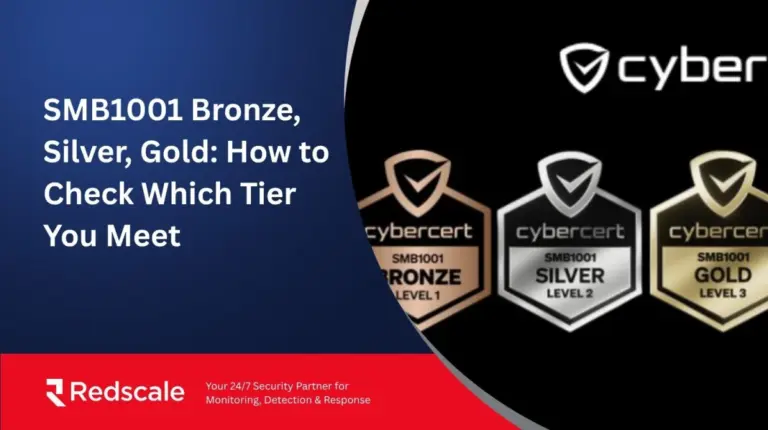
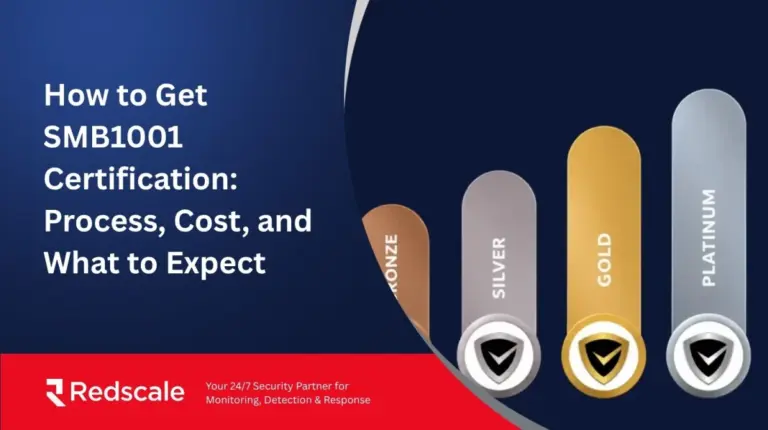
SMB1001 certification is a staged way for small and medium businesses to show that cybersecurity controls are installed, owned, evidenced, and maintained.
The SMB1001 is a multi-tiered cybersecurity standard built for small and medium-sized businesses. The value of SMB1001 is the structure it brings to security maturity because it helps a business understand:
- Its current level
- What needs attention
- What evidence may be needed before certification
The requirements behind SMB1001 cover areas such as technology management, access management, backup and recovery, policies, governance, and staff education.
The SMB1001:2026 update also matters because version changes can affect the controls, records, and readiness work a business needs to review before certification.
Cybersecurity and Cyber Insurance Requirements
Cyber insurance discussions often test whether cybersecurity controls are real, documented, and current.
Cyber insurance is not the same as cybersecurity. Insurance may help with financial recovery, depending on the policy, but it does not prevent incidents.
Underwriters commonly ask about controls, such as MFA or backups, although requirements vary by insurer and policy wording.
This is where many small businesses feel the gap. They may have some controls in place, but not enough evidence to show that those controls are reviewed, tested, and maintained.
Strengthen Your Cybersecurity with RedScale
Small businesses rarely lose control of cybersecurity all at once. A team enables MFA but doesn’t cover every account. Backups run but nobody tests them. Patches pile up because no one owns them. Alerts arrive but no one acts on them. A client or insurer asks for evidence, and no one has it ready.
Redscale’s managed security services keep every control owned, tested, and ready for review for Australian small businesses. As an Australian MSSP formed by Interscale, Redscale tracks MFA coverage, tests backups, assigns patch ownership, and prioritises alerts.
Contact Redscale to review your cybersecurity baseline.